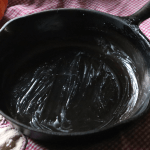
How to Season a Cast Iron Skillet with Bacon Grease
Cooking with cast iron is an important skill to know, so I will show you How to Season a Cast Iron Skillet with Bacon Grease to preserve these invaluable tools for cooking!Not only does this method infuse your cookware with a distinct flavor, but it also enhances the cooking surface with non-stick properties.I will guide you through the steps of seasoning while providing valuable insights into the benefits of cast iron cookware, how to properly wash it inbetween uses, and then protect it until it is ready to use again.
Cost: 2
Equipment
- Stovetop or Oven
Materials
- 1 cast iron skillet
- 2 tbsp bacon grease
- 2 dry paper towels
Instructions
Step 1: Preparing Your Skillet
- Start by ensuring your cast iron skillet is clean and free from any dirt or rust. If necessary, gently scrub it with a non-metal brush and warm soapy water. Rinse thoroughly and dry completely. If it has stubborn bits of food stuck on it, use a plastic scraper tool, never a metal one. Metal will remove the patina that may have been already built up.
Step 2: Preheating the Skillet
- Preheat your oven to 350°F (175°C). Place your skillet upside down in the oven to allow any excess moisture to evaporate while preheating. Water is great for cleaning, but is not wanted when you go to add the grease that will season the inside of the pan.
Step 3: Applying the Bacon Grease
- Once the skillet has preheated for about 10 minutes, carefully remove it from the oven using oven mitts or a heat-resistant glove, apply a thin layer of bacon grease to the entire surface of the skillet, including the handle with a paper towel. I hold the paper towel with my main 3 fingers, dip in the grease, then spread all around. You only want a thin layer of oil. It should not be dripping. If you got too much the first time, just drip the excess bacon grease into your glass jar of leftover bacon grease.
Step 4: Removing Excess Grease
- Using a clean cloth or paper towel, gently wipe off any excess grease or oil from the entire pan. The goal is to create a thin, even coating on the skillet that does not drip off when turned upside down. Using only a thin layer is the better way to season as the excess will just burn off or drip off and be wasted. Less is more here in this situation!
Step 5: Baking the Skillet
- Place the skillet back in the oven, right side up, on the middle rack and bake it for about an hour. This process polymerizes the bacon grease, creating a natural non-stick surface and promoting the formation of the pan's seasoning.
Step 6: Cooling and Repeating
- After an hour, turn off the oven and allow the skillet to cool inside the oven. Once it has reached room temperature, repeat steps 3 to 6 for additional layers of seasoning. Experts recommend applying at least three to four layers for optimal results.
Step 7: Maintaining Your Seasoned Skillet
- To maintain your seasoned cast iron skillet, always clean it with hot water and a stiff brush after each use. I purchased mine from Lodge and it has done a great job cleaning my pans over and over. I only use this scrub brush for my cast iron and nothing else. Avoid using dish soap, as it can strip away the seasoning you have or have worked hard to establish. The only reason I would ever use dish soap is if I cook fish in the skillet. I immediately dry it and cover with a thin layer of bacon grease right away. Always dry the skillet thoroughly and apply a light coating of oil before storing it. Make sure you wipe out the excess oil before putting it away so you do not attract pests from the bacon grease.
Notes
Here is my favorite brush to use to clean my Cast Iron Skillets
Here is the plastic scraper I talk about using while cleaning.
Here is my favorite Cast Iron Skillet you can purchase.
..........
- How often should I season my cast iron skillet? Once you season your cast iron skillet, if you keep up the proper cleaning process as described above, it will stay seasoned for a long time without the need to re-season it.
- Can I use other fats or oils instead of bacon grease for seasoning? You can technically use whatever grease you want, it just needs to have a high smoke point which means it will not smoke at a higher temperature. If you use something like vegetable oil, olive oil or flaxseed oil it may form a sticky residue on the pan. I only recommend using oils that will not cause your smoke alarm to go off because they are burning. Ones like grapeseed oil or coconut oil are better alternatives if you are not wanting to use animal fats.
- What if my cast iron skillet is already rusted? Then it will take a lot of elbow grease to clean it, but if it is not too rusty and in good condition without cracks, then it can be saved. One of the easiest ways to clean a rusted cast iron skillet is to scrub it down with dish soap and steel wool. This will remove the layers of rust and get down to the most bare iron so you can start the seasoning process.
- Is it necessary to season a new cast iron skillet? This all depends on if it says it is "seasoned" or not. Most times with a new cast iron pan, it is already seasoned when you buy it. If for some reason it is shiny silver, then you have a brand new pan. It must be seasoned quite a few times to get it up to the nonstick surface we are looking for. Funny story, when I first moved out when I was 17, I went to the Dollar General Store and purchased a cast iron skillet. I wanted to have something to commemorate my stepping out into the world on my own. How perfect with a cast iron skillet. I had no idea I was to season it before using it. I just thought it was shiny cause it was new and not used. Then I found out the hard way as I proceeded to use it for cooking bacon. It stuck so bad, it took a lot to scrape it off and clean it. After chatting with my Grandma Bettie, I realized I had to season it before using it again. This same skillet is my main skillet I use in all of my cooking. As you see my recipes using a cast iron skillet you will see this skillet.
- How can I remove stuck-on food from my cast iron skillet? I have a plastic scraper tool that I use to remove stuck on food. Using warm water, let the food soften up. Scrape well then finish off with a scrub brush. Like I mentioned earlier, I have a special one I use only for my cast iron skillets.